
Handle with Care: A Satirical Guide to Fragility
Abhishek Raj
7/24/20242 min read
Ah, the wine glass, that delicate masterpiece. One slight tremor, and ta-da, you’ve got yourself a pile of glass fragments. But let’s not stop at mere objects. Political configurations are just as fragile. One MLA decides to switch sides, and, there goes the government. And in the digital age, Reputations on social media are as fragile as a house of cards in a storm. One tweet or comment can turn life upside down.
Fragile things crave peace and predictability. They demand constant pampering and protection. We pour our time and money into making these delicate darlings more robust. Remember the Nokia 3310? The indestructible phone with a plastic shell that could survive almost anything — unless someone was determined to hammer it down (from the pointed side, of course). And don’t forget the social media managers who work hard to protect influencers’ reputations from any tiny scandal.
We all aim for stability, but for something to truly thrive, a bit of volatility is essential.
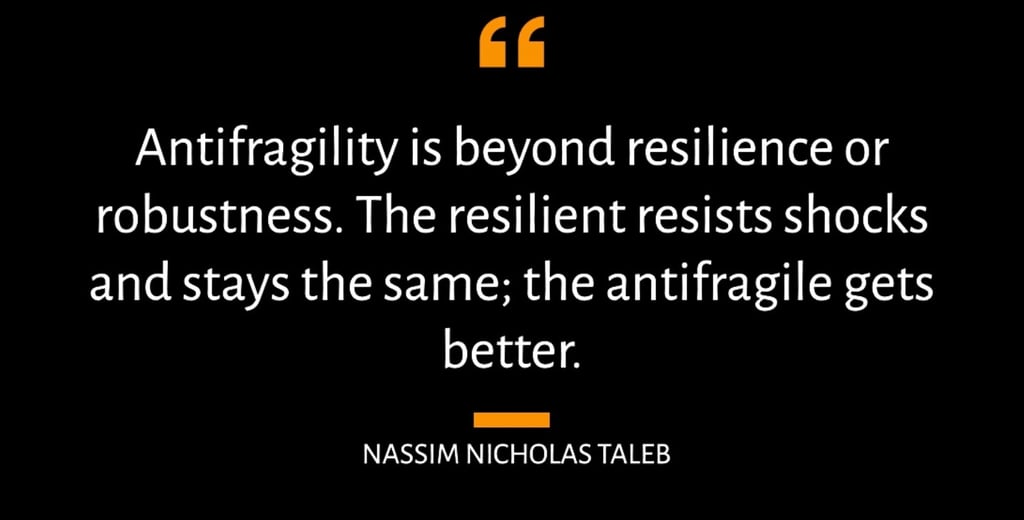
In 2011, Nassim Taleb introduced us to ‘antifragility.’ (No, it’s not a real word in the English language, but who cares?) According to Taleb, fragile systems break easily, robust systems resist change, and antifragile systems actually gain on chaos and disorder.
While his approach might not apply to every extreme, it does open up an intriguing perspective. Take the human body, for instance. Hit the gym, lift weights, and expose yourself to a world of pain, and what happens? Your body becomes antifragile. You grow stronger. But if you avoid the strain, your muscles will gradually atrophy.
Consider examples of antifragility: A healthy love relationship is antifragile because hardships and pain make it stronger rather than weaker. In fact, a person grows the most during the deep lows. Overprotective parents might shield their bachchas(children) from difficulties, but this can leave them less resilient and unprepared for the real world. Meditation teaches the mind to handle and grow from the constant flow of discomfort and pain, rather than being overwhelmed by it.
Funnily enough, negative reviews for YouTubers and book writers, instead of harming them, often result in free promotion. The more extreme the critique, the more people want to check out the book or video, leading to more sales and views.
The mind works in much the same way. It can be fragile or antifragile, depending on how we treat it. Avoid stress, pain, and disorder, and you’ll become fragile. But confront pain, learn from it, and you’ll grow. Pain is a universal constant. No matter how good or bad our lives get, pain will always be there. The choice is ours: will it break us, or will we learn to manage it and grow stronger?
Antifragility as a concept shows how constant pursuit of happiness is pointless. And how we can gain from adversities. So, next time you wrap your fragile wine glass or reputation in bubble wrap, remember this: sometimes, a little chaos is exactly you need to become truly unbreakable.
This article draws inspiration from the works of Nassim Nicholas Taleb. For those interested in exploring the concept of antifragility further, Taleb’s book “Antifragile: Things That Gain from Disorder” offers a deeper look, including several analytical insights.
Discover the Art of Simply Being
© 2024. All rights reserved.


While I’d love to get a handwritten letter delivered by carrier pigeon, an email works too. Let’s hear those thoughts!
Mail me at