
The Importance of Lies
A paradoxical truth
FEATUREDPERSPECTIVE
Abhishek Raj
1/6/20255 min read
I am convinced that the world would collapse without lies. Imagine a scenario where, for just one hour, everyone speaks only absolute facts. Marriages would crumble, friendships would end, and diplomats might reveal state secrets, triggering public unrest and maybe even war. Stock markets would crash, millions would lose their jobs, and humanity would spiral into chaos. In a nutshell, there would be bloodshed, leaving the world struggling as it confronts the fragile web of lies and half-truths that quietly hold society together. Ironically, it is these very lies that keep the world spinning.
Telling truth is easy, It’s simply stating facts. Lying, however is an art form. It takes imagination, a stable nervous system, and an oscar worthy straight face. Think about it, a good lie isn’t merely about saying something untrue. It’s about crafting a believable story that feels no less than reality itself. That, my friends is creativity 101.
Lies We Can’t Escape
In the transactional world, lies are the bread and butter. Marketing and sales campaigns, like those promising you'll turn into a Disney princess or a K-drama actor with just a dab of fairness cream, thrive on them. Remember the Fair & Lovely ads where it seemed like the only problem in your life was not having fair skin, and once you applied their cream, all your life problems would magically go away.
I literally drank my weight in Horlicks and Bournvita as a kid, hoping to grow taller, stronger, and smarter (like they claimed); turns out, I was just sipping sugar. Funnily, I still have Horlicks containers being used as storage at home. Politicians make up stories to win votes, and fruit vendors insist their watermelons are "the sweetest and reddest in town," until you take a bite and realize otherwise. Oh, and nowadays, they even add sweeteners too.
Lies grease the wheels of commerce and governance. Without them, the world might slow down. Sure, it'd be more honest, but also a lot less fun. Sometimes, we see these lies as necessary evils used to maximize profits.
A Childhood Built on lies( And We’re Fine, mostly)
From the moment we’re born, we’re wrapped in a layer of comforting lies. Remember when your mother told you that your late grandparent had turned into a star? Beautiful, right? I once heard a comedian say, “The light from a star takes minutes or even hours to reach Earth and by the time we see it, that star might have already exploded. So what does that mean, did my grandfather just explode with a bang.” It’s funny. Maybe they should’ve said he turned into a tree instead. We could still visit them or even hug them. That way, at least we could have saved a lot of trees.
Forget that for a moment, remember when you asked how babies are made, and the answer was , “they’re god’s gift to the world”. It’s nice to know all it needed was divine intervention. And then there is the biggest one of all: “ Death is the ultimate truth.” Hold on, if it’s the ultimate truth, why dress it up with so much fiction?
When someone dies, we don’t bluntly say, "They died." That’s too harsh. Instead, we say phrases like "passed away" or "they’re in a better place now." A better place? Like where, The Himalayas? It’s comforting, sure, but it’s a lie that acts like a shock absorber to the harshness of reality. Many religions even build entire afterlife narratives around this, offering both hope and a moral compass.
It’s good to an extent; it does give a framework based on hope and fear, which shapes our behaviour. But somewhere along the way, some people start to profit from it, using fear as a tool. And that's where things start to get truly ugly, because at the end of the day, both a marketplace and a place of worship are driven by the same thing : profits.
Lies Nature tells
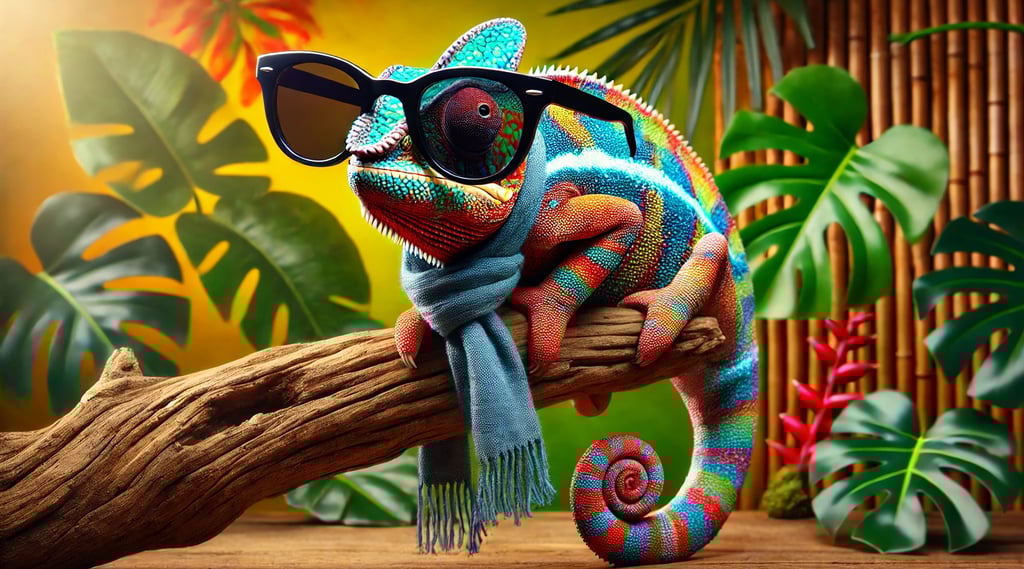
We have a habit of not including ourselves in nature forgetting that we’re a part of it too. And while humans lie a lot, we’re not the only ones. Nature itself is a master of deception. Ever seen a mirage in the desert? That’s Earth’s way of saying, ‘Gotcha’. Chameleons change colour to blend in, making them ultimate hide-and-seek champions. Or consider the octopus, which can change its skin texture to hide from predators. It's magic, right? Nature’s lesson? Lies can be life-saving.
The Relativity of truth
But what about truth? Is it even valuable? We need to realize that no matter what we say, whether truth or lie, is evaluated by the listener. Consider speaking about the same thing to two people, X and Y. Each has their own preconceived notions, biases, and different understanding of the context. What’s true for X might very well appear as a lie to Y, and that's perfectly Okay.
Just like everyone has their own story and struggles, it seems like everyone today has their own truth too. Nobody lies anymore, or so they say. Instead, every word, every story, is just “their truth”, conveniently shaped to fit their narrative. It’s funny how the lines between honesty and fiction blur when we wrap a lie in the neat package of authenticity. Call it whatever you want, but sometimes, “my truth” feels like a creative rebranding of a good old-fashioned lie.
But here's the thing-truth doesn't just exist in the eyes of others. It also lives within us. As I mentioned earlier, every word you speak, truth or lie, is evaluated by the listener. But there's a third person in the picture - YOU. You're the one who hears every lie and truth you speak. You are, in a sense, your own permanent observer.
What you believe about yourself matters more than anything else. When you tell lie after lie, there comes a point where you start to question everything you say, wondering if it's just another deception. You lose credibility in your own eyes, and that loss is harder to shake than any judgment from others. The regret that follows? It's not just a passing feeling; it hits you like a tsunami, and once it does, it's not easy to recover from.
At the end of the day, you need to be honest, not for others, but for yourself. What others perceive or what society calls your “truth” is secondary. What truly matters is that you can stand proud of the truth you hold within, and that it aligns with who you are (without any masks).
Truth in Relationships
When it comes to genuine relationships, lying is like playing with fire. Here, honesty is the golden ticket. Even a small deviation from the truth can erode trust. While it's important to balance truth and lies in relationships, the stakes are much higher. Lies may offer temporary relief but become a heavier burden with time. True honesty, on the other hand, deepens bonds. As I've said before, a healthy relationship is antifragile: it thrives on challenges and chaos, but never on deceit.
That said, one lie stands out as truly noble: the one you tell anyone to spend time with your partner, assuming if it’s true love. If there’s an almighty keeping score, I’m pretty sure they’d give this lie a free pass. Love, in my book, is the most rational irrationality, and any lie that nurtures it can’t possibly be wrong. It might just be the most sacred lie of all.
Closing Notes
Lies are like fire. They can cook your food or burn your house down. Lies aren’t inherently good or bad; they’re tools. They have the power to create or destroy, to heal or harm. The key lies in discernment: knowing when a lie serves a higher purpose and when it undermines your integrity or relationships.
You can’t possibly speak the truth all the time, and that’s okay. Striking the right balance is an art, and if done well, it’s a masterpiece. So, lie wisely, my friend. Handle your deceptions with care and intention, and never lose sight of the one person you must always be honest with - yourself. After all, the best lies are the ones that don’t burn houses. And if nothing works out? At least you’ll have a great story to tell.
Discover the Art of Simply Being
© 2024. All rights reserved.


While I’d love to get a handwritten letter delivered by carrier pigeon, an email works too. Let’s hear those thoughts!
Mail me at